
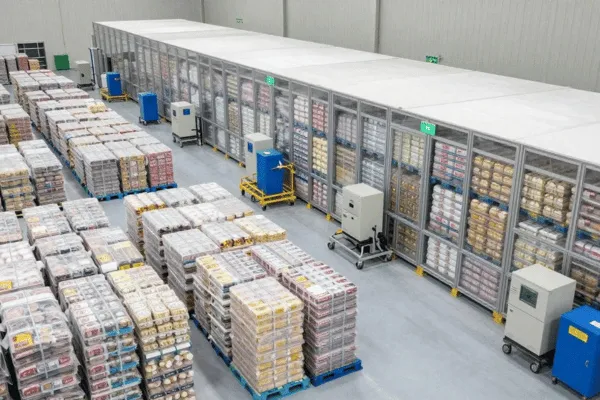
Excess frozen food can quickly become a warehouse problem. Freezer capacity is limited, while cancelled orders, production overruns and changing demand can leave businesses holding more stock than planned. The important thing is to act before the inventory becomes harder to move. A structured review can help identify what you have, how much remains and which commercial routes may be available.
Why Do Businesses End Up With Excess Frozen Food?
Frozen inventory often starts with a reasonable business decision. A manufacturer produces against expected demand, a wholesaler orders based on previous sales, or a retailer commits to a planned promotion. Then something changes. Demand falls, an order is cancelled or a product is replaced, leaving frozen stock without its original sales route.
Production Overruns
Production planning is based on forecasts. If demand falls after production has started, finished frozen products may remain in storage. The product may still be suitable, but the business may no longer have enough confirmed demand to move it.
Cancelled Orders
A cancelled order can leave a manufacturer with a complete batch. The product was produced for a specific commercial reason, but the expected buyer is no longer there. The warehouse now has to find another suitable route for the stock.
Seasonal Demand
Frozen food can be strongly affected by seasonal purchasing. A product planned for a particular campaign may become surplus when the campaign ends, which is why stock reviews should happen before seasonal demand disappears.
Overstocking
Sometimes the problem is simply volume. A business orders heavily to secure supply or meet expected demand, but sales fail to match the forecast. The result is excess frozen inventory that continues taking up valuable freezer capacity.
What Counts as Excess Frozen Food Stock?
Excess frozen food can include overstock, production surplus, cancelled customer orders, end-of-line products, discontinued products, retailer rejected stock, seasonal surplus and slow-moving inventory. The reason the stock became surplus can also be useful when presenting it to a potential buyer because it gives more context about why the original sales route is no longer available.
What Types of Frozen Food Can Become Surplus?
Frozen food is a broad category, and different products can create different commercial opportunities. Frozen meat, poultry, seafood, vegetables, fruit, ready meals, bakery products, desserts and ice cream can all become surplus depending on demand and supply chain changes.
Frozen Meat and Poultry
Frozen meat and poultry can create large stock volumes for manufacturers and wholesalers. Examples include chicken, beef, pork and processed meat products. Quantity, packaging, date information and storage history should be clearly documented before the stock is offered for consideration.
Frozen Seafood
Seafood can include fish fillets, portions, shellfish and prepared seafood products. A clear stock list should identify the product, pack size and quantity, while storage information and relevant date details should also be included where available.
Frozen Vegetables and Fruit
Frozen fruit and vegetables can become surplus because of seasonal purchasing and production changes. These products may also be stored in significant pallet quantities, so a detailed inventory makes it easier to understand exactly what is available.
Frozen Ready Meals
Ready meals can become surplus after cancelled orders or retail changes. Different pack sizes and product lines should be listed separately to avoid confusion when a stock enquiry contains several products.
Frozen Bakery and Desserts
Frozen bakery products can include bread, pastries, cakes, dough products and desserts. These products may have specific storage requirements that need to be maintained during handling.
Ice Cream and Frozen Treats
Seasonal demand can make frozen desserts particularly sensitive to timing. Stock that was attractive during a peak sales period may become harder to move later, so early stock reviews can help identify this risk.
Why Is Frozen Overstock Expensive to Hold?
Frozen stock needs space, and that space can become valuable when freezer capacity is limited. Every pallet occupies capacity that could otherwise be used for active inventory. Frozen storage also requires controlled conditions, so surplus stock can continue creating operational pressure while it remains in storage.
What Are Your Options for Excess Frozen Food?
The first step is not automatically disposal. If the original customer can still accept the stock, this may be the simplest option. A specialist food buyer may also consider production surplus, cancelled orders and other suitable frozen inventory. Where appropriate, businesses can also consider redistribution, while food that is unsafe or legally unsuitable should not be presented as ordinary saleable stock.
How Should You Prepare Frozen Food Stock for Clearance?
Good preparation makes a stock enquiry much easier. Create a list showing every product, quantity, cases, pallets, relevant dates, packaging condition, batch information where available, storage information and warehouse location. If several products are available, keep each product line separate so the buyer can clearly understand the inventory.
Create a Stock List
Include every product separately and list the quantity, cases and pallets. If several products are available, keep each product line clear.
Check Dates
Record the relevant date for each product. Do not mix best-before and use-by information.
Check Packaging
Damaged packaging can change the commercial suitability of a product. Record visible issues honestly.
Record Storage Information
Frozen products require appropriate storage. Provide relevant information about the stock’s storage conditions where available.
Add the Warehouse Location
Location helps establish collection and transport requirements. Include the warehouse location with the stock information.
Can Short-Dated Frozen Food Still Be Sold?
Potentially, but the date and food safety requirements matter. Short-dated does not automatically mean unsafe, but it does mean the product has limited remaining shelf life. The important distinction is between best-before and use-by dates, so businesses should identify the relevant date clearly before offering the stock.
[Internal Link: Short-Dated & Near-Expiry Stock → /short-dated-near-expiry-stock-uk/]
How Does Frozen Food Stock Clearance Work?
The process normally begins with basic stock information. Provide products, quantities, dates and the warehouse location, after which the stock can be reviewed based on the information supplied. If it is suitable, a commercial valuation and terms can be discussed before collection or transfer arrangements are made.
Step 1: Submit the Inventory
Provide products, quantities, dates and location. Include batch and packaging information where available.
Step 2: Review the Stock
The products can be assessed based on the information supplied, including product type, quantity and remaining shelf life.
Step 3: Discuss Value
If the stock is suitable, a commercial valuation can be discussed.
Step 4: Agree Terms
The agreed products and commercial terms are confirmed.
Step 5: Arrange Collection
Suitable logistics are organised according to the stock and location.
When Should You Clear Excess Frozen Stock?
Earlier is usually better. That does not mean every surplus batch needs immediate clearance, but businesses should avoid waiting until freezer space is severely restricted. A good stock review can flag problems while there are still several possible routes, which is particularly important for seasonal products and stock approaching its relevant date.
How Can Businesses Reduce Frozen Overstock?
Prevention starts with better visibility. Track sales velocity, stock levels, remaining shelf life, customer orders, seasonal demand, production quantities and slow-moving products. A regular review can reveal ageing inventory before it becomes an emergency, helping the business identify surplus earlier.
How Can a Business Sell Frozen Food Surplus?
Start with an accurate inventory list showing product names, quantities, dates, pallet numbers and warehouse location. Then identify whether the stock is still suitable for normal customers, and if the original sales route is no longer available, a commercial frozen food buyer may provide another option.
[Internal Link: Frozen Food Surplus UK → /frozen-food-surplus-uk/]
What Should You Check Before Selling Frozen Stock?
Before submitting frozen inventory, check that products are correctly identified, quantities are accurate, dates are recorded and packaging condition is known. Storage requirements, batch information and warehouse location should also be clear because a buyer needs enough information to understand what the stock actually contains.
Frequently Asked Questions
What causes frozen food surplus?
Frozen food surplus can come from production overruns, cancelled orders, seasonal demand, overstocking, retailer changes and slow sales. A manufacturer may produce more than customers eventually need, while a wholesaler may be left with stock after an order is cancelled.
Can I sell frozen food overstock?
Suitable frozen food overstock can be submitted for commercial consideration. The buyer will need information about the products, quantities, dates, packaging and location. Storage conditions can also matter, so providing accurate information is the best starting point.
Who buys frozen food surplus?
Frozen surplus can be considered by specialist stock buyers, wholesalers, food marketplaces and other commercial businesses. The right route depends on the product category, volume, date and location.
Can I sell frozen food by the pallet?
Palletised frozen food can be presented for consideration. Include the number of pallets, cases per pallet, product descriptions, dates and collection location. Mixed pallets should be described clearly.
Do buyers purchase frozen meat surplus?
Frozen meat surplus can be considered depending on the product, quantity, condition, date and applicable requirements. Provide exact product information and packaging details, along with relevant storage and traceability information.
Do buyers purchase frozen seafood?
Frozen seafood can be included in a surplus stock enquiry. Useful information includes the product description, pack size, quantity, date, packaging condition and storage location.
Can short-dated frozen food be sold?
Short-dated frozen food can potentially be sold while it remains safe and legally suitable. The date type matters, so businesses should clearly identify the relevant date and check applicable requirements before offering stock.
What information should I provide?
Provide product names, quantities, pallets, dates, batch information, packaging condition and warehouse location. If the stock contains several products, list each product separately.